
The PSLE Maths examination is sat in late September each year, and for most P6 students, June marks the beginning of serious revision season. Three months sounds like a generous amount of time. But without a clear structure, those weeks can pass in a blur of disorganised studying that leaves real gaps unaddressed.
A well-planned revision schedule does two things. It ensures that all the important topics get covered, and it builds the exam stamina and confidence that children need on the day itself. A clear PSLE Maths revision plan is often the difference between a child who feels ready and one who is simply hoping for the best.
This guide outlines a practical three-month approach that parents can adapt to their child’s specific strengths and weaknesses.
Before You Start: Know Where Your Child Stands
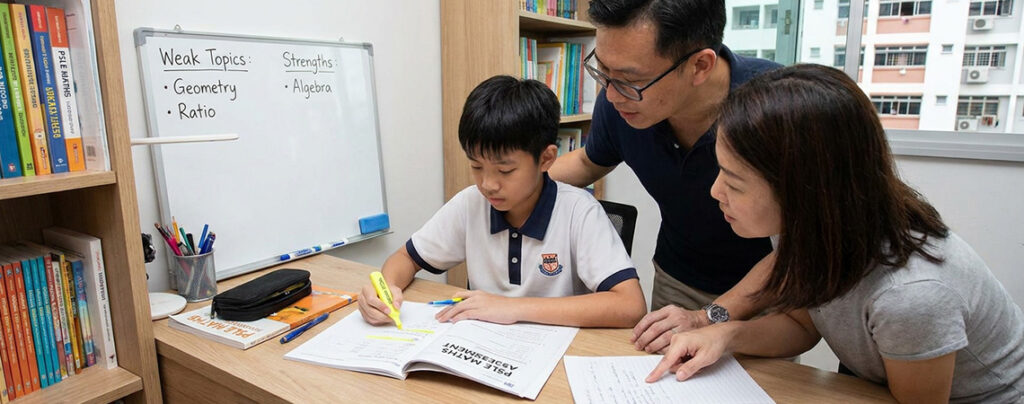
The most common revision mistake is treating all topics equally. Some areas will need far more time than others, and spending two weeks on something your child already understands well is time that could be better used elsewhere.
Before the three months begin, sit down with your child and go through recent school papers or assessment books. Note which topics are consistently weak and which are reliably strong. This takes an hour but will shape the entire revision period more usefully than any generic schedule.
Keep a simple list: strong topics, borderline topics, and topics that need serious work. This list drives how you allocate time each month.
Month 1: Close the Gaps in Core Concepts
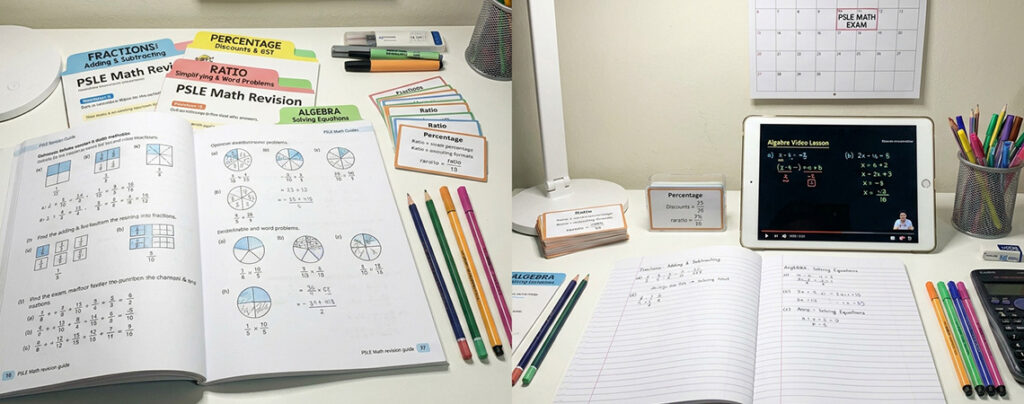
The first month should focus entirely on content, specifically the topics your child finds most difficult. For most P6 students, this will involve some combination of ratio, fractions, percentage, and algebra. It is also worth noting that from 2026, Speed has been removed from the PSLE Maths syllabus, a change confirmed by SEAB, so revision time previously spent on that topic can be redirected elsewhere.
Work through one topic at a time rather than cycling through everything each week. Depth is more valuable than breadth at this stage. Understanding ratio properly across three weeks will serve your child better than touching on six topics superficially.
Keep sessions to 45 to 60 minutes of focused work. Research consistently shows that shorter, concentrated study sessions produce better retention than marathon sittings. Quality of practice matters more than the number of hours on the clock.
Month 2: Practise Across Topics and Build Problem-Solving Skills
Once the core concepts are more solid, the second month shifts to mixed practice. Instead of drilling one topic repeatedly, your child should work through problem sets that blend multiple concepts together. This is closer to what PSLE Paper 2 actually demands.
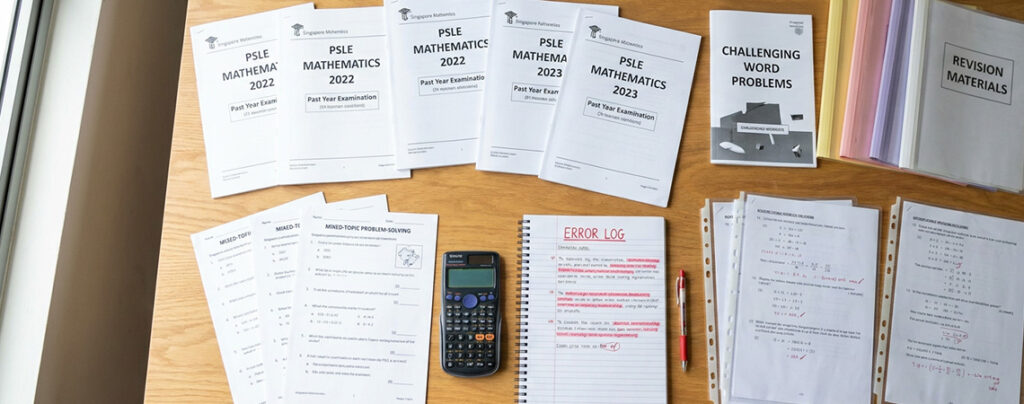
Topical assessment books are useful in Month 1, but past year PSLE papers become the main tool in Month 2. Working through them under loose time conditions helps your child develop familiarity with question formats and the level of complexity expected.
After each session, spend as much time reviewing wrong answers as solving new questions. Understanding precisely where and why a mistake was made is where real learning happens. A simple error log, where your child notes the question type, what went wrong, and the correct approach, builds powerful awareness over time.
In our own lessons, we often see students who can solve a ratio question correctly on its own, but stumble when the same concept is buried inside a multi-step word problem. This usually points to a gap in reading comprehension rather than the Maths itself, and once that link is made, the improvement tends to be quick and noticeable.
Month 3: Sharpen Exam Technique and Build Stamina
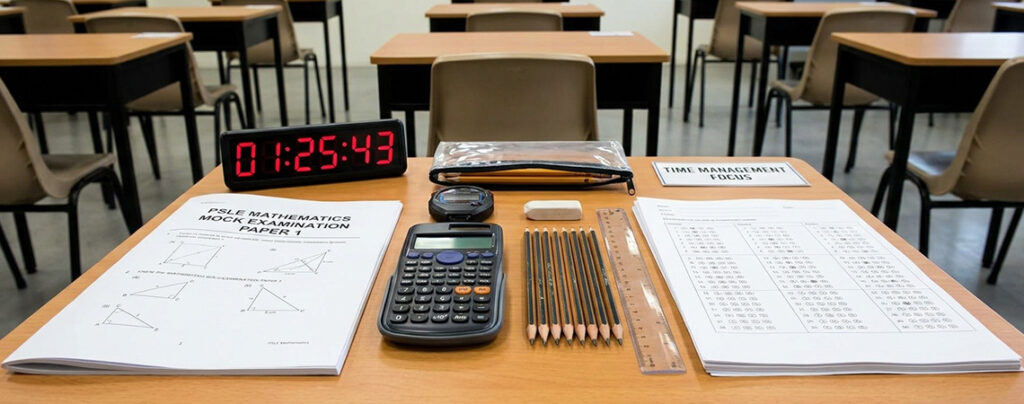
The final month is about translating knowledge into exam performance. This means timed, full-paper practice under conditions as close to the actual exam as possible. Paper 1 is 60 minutes with no calculator. Paper 2 is 90 minutes with a calculator. Practise both formats separately.
Time management is one of the most underestimated factors in PSLE Maths results. Many children know the material but lose marks because they spend too long on difficult questions and rush the easier ones. Practising under timed conditions builds the habit of moving on when stuck and returning to difficult questions at the end.
In the final two weeks before the exam, reduce new practice and focus on reviewing familiar material. The brain consolidates knowledge during rest. A well-rested child sitting a paper they have prepared systematically will consistently outperform an exhausted child who has crammed.
Daily Habits That Make a Difference
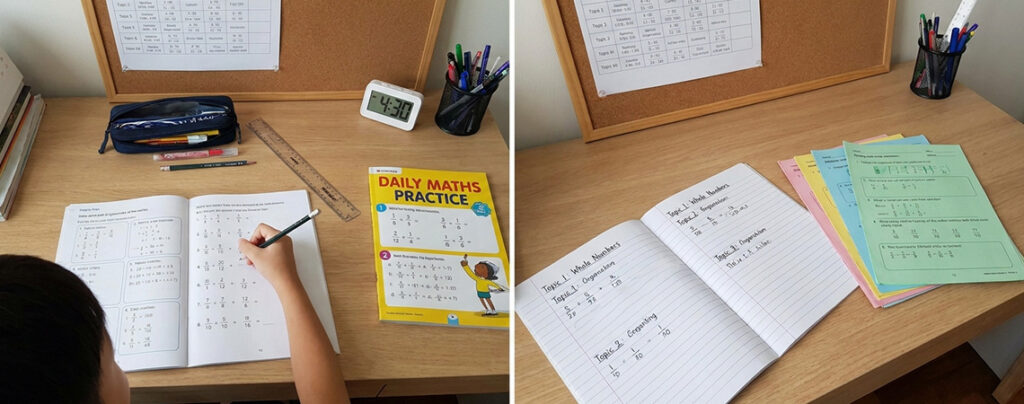
Beyond the monthly structure, a few daily habits have an outsized impact on Maths performance. Short daily practice, even 20 to 30 minutes on days without tuition or major homework, keeps skills sharp and prevents the forgetting that happens when revision is clustered into large but infrequent sessions.
Encourage your child to read each question twice before starting any working. Writing down what the question is asking before setting up an equation is a simple but effective technique that prevents many avoidable errors in problem sums.
Neatness in working matters more than most students realise. Clear, well-spaced working helps a child check their own logic and allows markers to award method marks even when the final answer is wrong.
Managing Exam Nerves

Exam pressure is real, and it affects even well-prepared students. Consistent revision over three months is itself the best antidote to anxiety, because familiarity with the material reduces the fear of the unknown.
Keeping the home environment calm during revision, avoiding comparisons with siblings or classmates, and celebrating effort rather than just results, all contribute to a child’s ability to manage pressure constructively. The MOE also encourages a balanced approach to learning, a good reminder that exam preparation need not come at the cost of a child’s wellbeing.
On the night before the exam, revision should stop. A good meal, an early night, and a calm morning are worth more than last-minute cramming.
Getting Structured Support

Not every family has the time or background knowledge to guide their child through three months of Maths revision alone. A good tuition programme provides the structure, accountability, and expert feedback that make a consistent difference, and can help anchor a PSLE Maths revision plan that might otherwise lose momentum halfway through.
At Daniel’s Math Tuition, P6 students work in small groups with a tutor who brings ten years of teaching experience and a background as a former MOE school teacher. Small class sizes mean your child gets the individual attention that is often difficult to achieve in a standard classroom setting. Our PSLE Maths tuition programme is aligned to the current syllabus and adjusted to each student’s areas of need, whether that is fractions, algebra, or exam technique.
For families who need more intensive support in a shorter window, holiday crash courses are available during the June and September school holidays. Online tuition options are also available for added flexibility. With a 5.0 Google Rating, parents can feel confident their child is in good hands. You are welcome to get in touch to find out more or book a trial session.